
Commercial Vehicle Recovery Built Around Load Capacity Limits
Medium duty towing in Killeen for box trucks, service vehicles, and mid-size commercial equipment within rated capacity
Construction crews, HVAC contractors, and service operators running fleets across the Killeen area deal with a specific recovery problem when a box truck or service vehicle breaks down: most light-duty tow trucks are not rated for the load, and heavy-duty operators are dispatched for full-size 18-wheeler work and may not respond quickly to a mid-size commercial job. Fast Lockouts fills that gap with flatbed trucks, appropriate winching equipment, and a clear capacity policy—light and medium-duty vehicles within the service radius are handled directly, and jobs that exceed the equipment rating are referred to heavy-duty specialists rather than attempted unsafely. That referral policy is itself a quality indicator: a carrier willing to tell you on arrival that the job is outside their capacity is a more reliable partner than one who attempts a load beyond their equipment rating.
Medium-duty tows are loaded using winching techniques appropriate to the vehicle weight and configuration. Each job is assessed on arrival to confirm that the vehicle falls within the flatbed's rated capacity before equipment is attached. Fast Lockouts currently contracts with the City of Austin for fire truck and ambulance maintenance support, which reflects the kind of load-handling precision required when commercial fleet vehicles need recovery without creating secondary mechanical damage during transport.
Call 737-701-2848 to describe your vehicle type and situation so the right truck and equipment can be confirmed before dispatch.
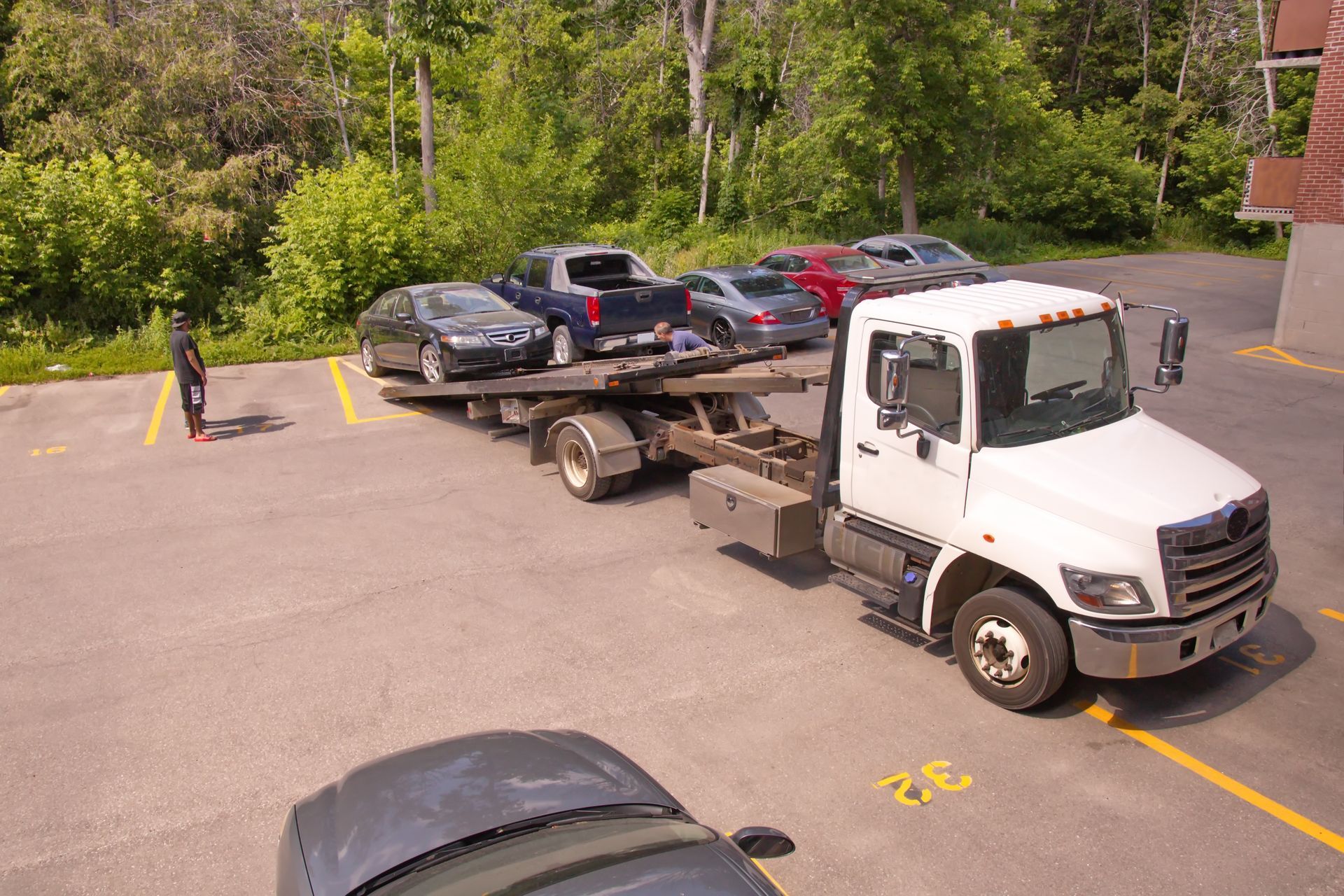
What Medium Duty Towing Actually Accomplishes
A box truck or service van sits in a weight and dimension category that standard light-duty flatbeds can technically attempt but may not handle safely at full capacity. The winching cable attachment point, the strap rating, and the deck weight limit all need to match the vehicle being loaded—and the mismatch between light-duty equipment and a medium-duty vehicle shows up as load shift during transport, strap failure under tension, or difficulty controlling the truck on grades and highway ramps. Seven years of towing experience that includes medium-duty commercial vehicles means those mismatches are identified before the vehicle goes on the deck, not after.
After a medium-duty tow is completed, the vehicle arrives at its destination with no additional damage from the loading or transport process. For contractors in the Buda area who rely on service vehicles to complete time-sensitive jobs, getting a box truck recovered and delivered to a shop without creating a second repair issue on top of the original breakdown is the practical measure of whether the tow was done correctly.
Heavy-duty vehicles—18-wheelers, large cranes, and oversized construction equipment—fall outside the medium-duty service scope. Fast Lockouts identifies this on arrival and connects you with the appropriate heavy-duty carrier rather than proceeding with equipment that is not rated for the load.
Questions About How Medium Duty Towing Is Handled
Medium duty recovery involves load assessment decisions and winching techniques that differ from standard passenger vehicle towing. The following answers address the practical mechanics of how these jobs are executed.
How is a vehicle's weight and size confirmed as medium duty rather than heavy duty before loading begins?
The technician assesses the vehicle's gross vehicle weight rating, overall length, and load configuration on arrival to confirm it falls within the flatbed's rated capacity before any winching equipment is attached.
What winching technique is used to load a non-running box truck onto the flatbed?
A rated cable is attached to a designated frame recovery point on the vehicle, and the winch pulls the vehicle up the lowered flatbed deck at a controlled speed—the attachment point is selected based on the vehicle's frame layout and the position it is stranded in.
How does medium duty towing in Killeen handle vehicles stranded in tight locations like job sites or parking structures?
Access and positioning are assessed before the truck is set up, because a flatbed requires a specific approach angle and clearance to lower the deck—if the approach is obstructed, the recovery sequence changes to account for the constraint.
What is included in a medium duty tow versus what is handled separately?
The tow covers loading, securing, transport to the destination, and unloading—mechanical repairs, fuel delivery, and roadside diagnostics are separate services not performed as part of the tow itself.
Why does a quality carrier refer heavy duty jobs to specialists rather than attempting them?
Equipment rated for medium duty loads has specific winch pull ratings and deck weight limits—exceeding those limits during an attempted heavy duty tow creates risk of equipment failure and load shift that endangers the driver, the vehicle, and other road users.
Fast Lockouts also handles medium duty towing in Austin, Temple, Buda, Elgin, and Round Rock. To confirm your vehicle type falls within the service range and arrange dispatch, call 737-701-2848 before the truck rolls so capacity is verified in advance.