Running Empty Before You Reach the Next Station
Fuel delivery in Killeen for drivers stranded on local roads, rural routes, and highway corridors without access to a nearby gas station
Running out of fuel on a rural route or a stretch of highway without a nearby station creates a problem that walking cannot realistically solve. Fast Lockouts delivers fuel 24/7 across Killeen and the surrounding Austin metro region, covering an 80-mile north-to-south corridor from Temple to Bastrop and 50 miles east-to-west from Elgin to Lago Vista. The technician arrives with fuel in a safe transport container, adds it directly to your tank, and confirms the vehicle starts before leaving the scene. Cedar Park and Buda drivers running long commutes on Highway 183 and I-35 are among the most frequent callers for this service, particularly during late-night and early-morning travel when stations may be spaced further apart than a low-gauge reading allows for.
The call process is direct: provide your location and specify whether your vehicle takes gasoline or diesel so the technician arrives with the correct fuel. Delivering the wrong fuel type to a stranded vehicle creates a separate mechanical problem, so that confirmation happens before dispatch rather than at the scene. Fuel cost is separate from the service call, which means the delivery fee covers the technician's arrival and the work of safely adding fuel to your vehicle.
Call Fast Lockouts with your exact location and fuel type to get the right delivery dispatched to your position without delay.
What Fuel Delivery Actually Involves at the Roadside
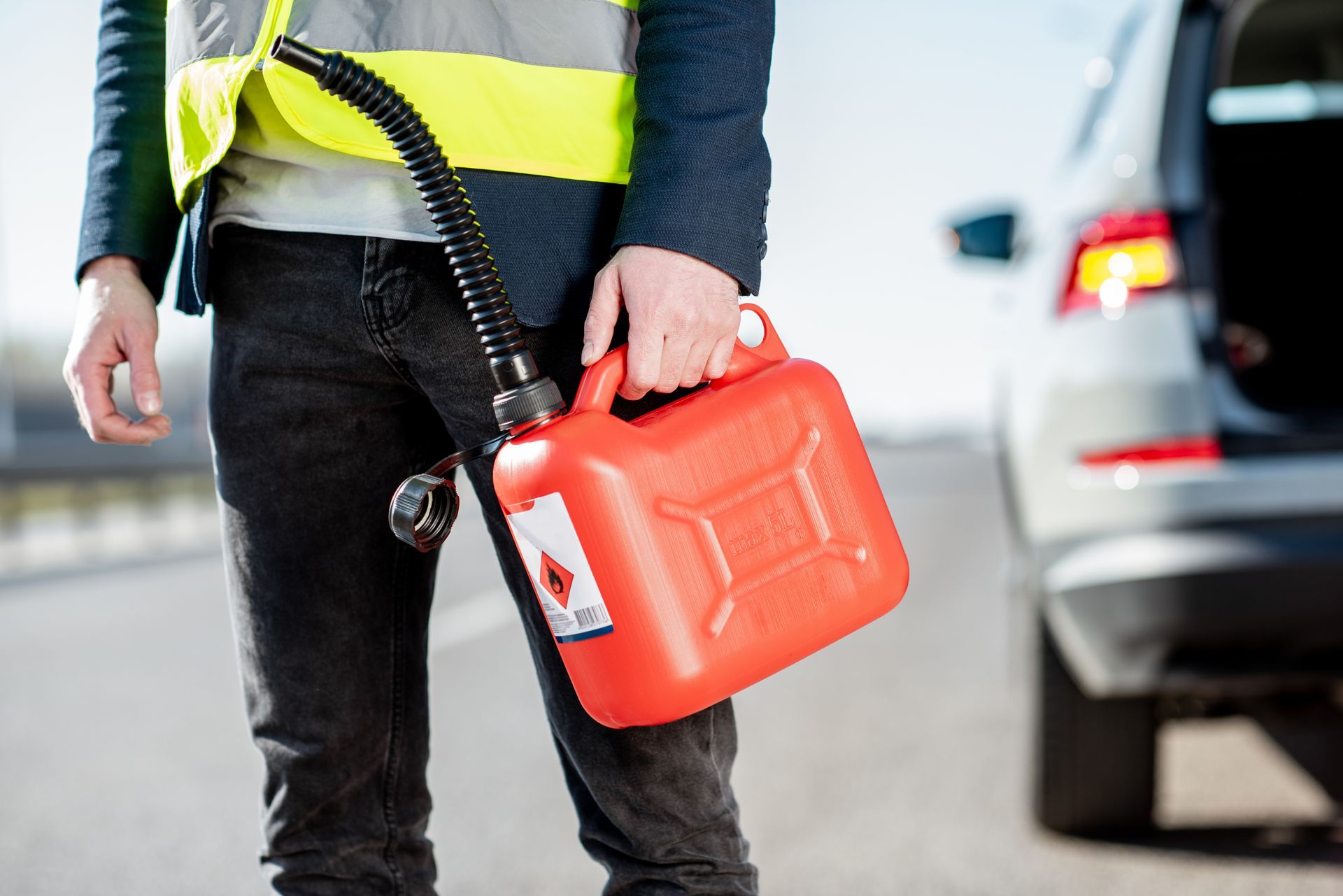
Fuel delivery is not simply handing over a gas can. The technician arrives with a properly sealed transport container rated for fuel storage, adds the fuel through the vehicle's filler neck to avoid spillage or contamination, and then confirms the vehicle starts and runs before marking the call complete. For diesel vehicles, this matters more than with gasoline because diesel engines that run completely dry can draw air into the fuel lines, requiring bleeding before the engine will start reliably. The technician accounts for that possibility when the vehicle is diesel and the tank has run fully empty rather than just low.
After the fuel is added and the vehicle starts, you will notice the engine runs normally and the fuel gauge begins to register. The amount delivered is sufficient to reach the nearest station, not a full fill—the goal is to get the vehicle moving safely to a location where a complete fill is possible. Fast Lockouts holds a City of Austin contract that includes emergency vehicle support, which reflects a standard of operational readiness that applies to civilian calls as well.
Drivers who are uncertain whether their issue is fuel-related or mechanical can describe the symptoms when they call. A vehicle that cranks but does not start after running low may have a fuel delivery issue that goes beyond an empty tank, and the technician can assess on site whether the fuel addition resolves the problem or whether the situation requires a tow.
Common Questions About Emergency Fuel Delivery
These questions address how fuel delivery works at the roadside and what drivers should know before the technician arrives.
How do you confirm the correct fuel type before the technician departs for your location?
You specify gasoline or diesel when you call with your location. The fuel type is confirmed during dispatch because delivering the wrong fuel to an empty tank requires professional draining before the engine can be run, which turns a simple service call into a much more involved job.
What happens if a diesel vehicle runs completely dry before the technician arrives?
A diesel engine that runs until it pulls air into the fuel lines may not start immediately after fuel is added because the fuel system needs to be reprimed. The technician is aware of this possibility for fully dry diesel tanks and handles the priming step before confirming the vehicle is ready to drive.
How much fuel does the delivery include and is it enough to reach a station?
The delivery is sized to get the vehicle started and moving to the nearest available fuel station, not to provide a full tank. The technician confirms the vehicle starts before leaving, so you know the fuel added was sufficient to run the engine and reach the next stop.
Why does fuel transport require a sealed container rather than an open can?
Fuel containers used for roadside delivery are specifically rated for safe transport and spillage control. Open containers create spill risk during transport and at the delivery point, and depending on local regulations, transporting fuel in non-approved containers on a service vehicle is not permitted.
What should you tell the technician if the vehicle still does not start after fuel is added?
Describe whether the engine cranks without starting or does not respond at all. A vehicle that cranks but does not catch after receiving fuel may have an air-locked fuel line or a separate mechanical issue that requires assessment beyond what the fuel delivery itself resolves.
Fast Lockouts also provides
fuel delivery in Austin, Temple, Buda, Elgin, and Round Rock. To request a delivery, call 737-701-2848 with your location and fuel type so the right equipment is dispatched immediately.