
Dead Battery Getting You Back on the Road
Jump start service in Killeen for vehicles with dead batteries in parking lots, driveways, and along major travel corridors
A dead battery that leaves a vehicle completely unresponsive is one of the most common breakdowns across the Austin metro area, and it rarely happens at a convenient time or location. Fast Lockouts offers 24/7 jump start service throughout Killeen and the surrounding region, with a service radius that spans 80 miles north-to-south and 50 miles east-to-west. Commercial-grade jump equipment arrives with the technician, providing the sustained output needed for larger engines, cold-soaked batteries, and vehicles that have been sitting for extended periods—situations where standard consumer jumper cables frequently fall short.
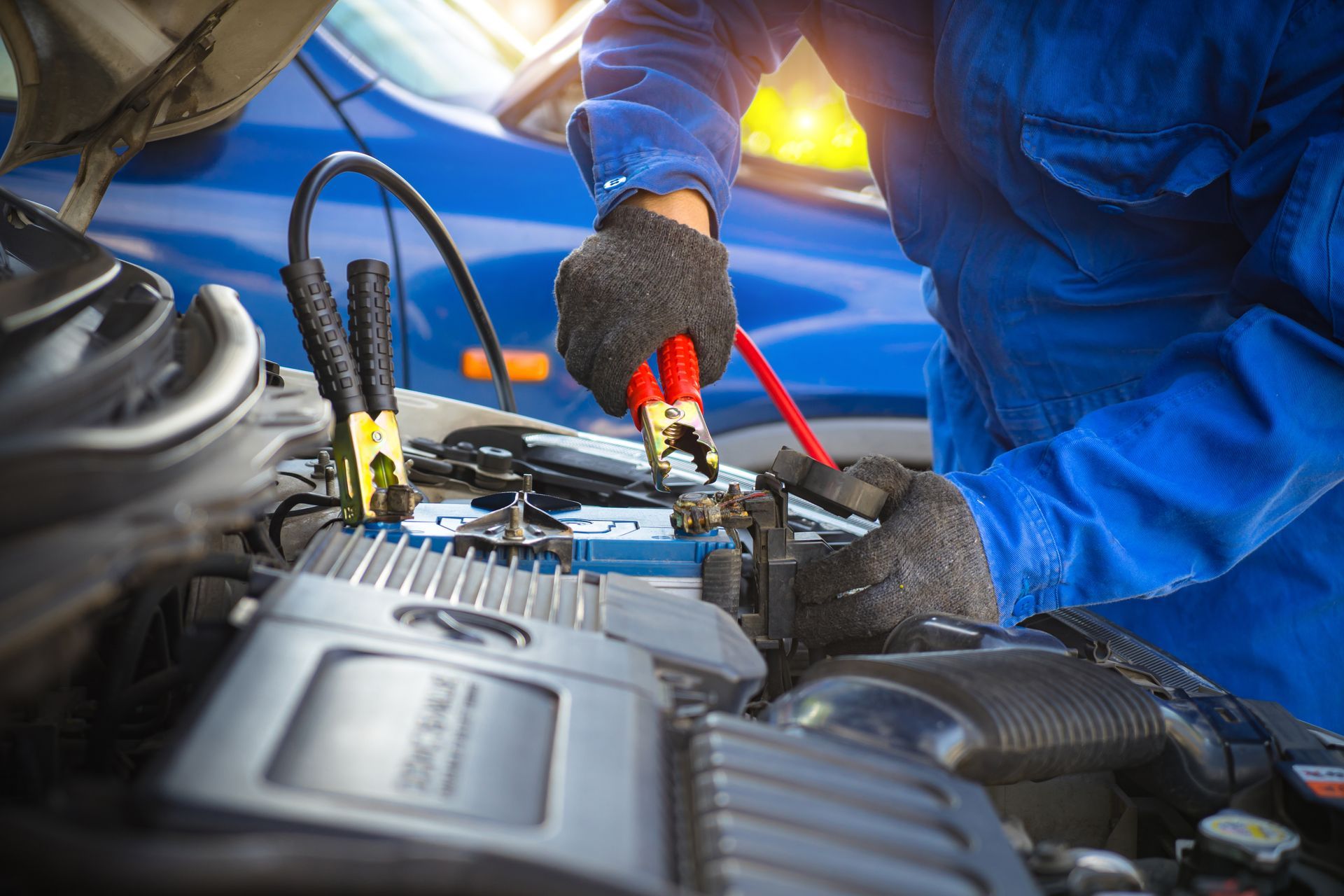
When the technician arrives, the sequence is direct: connect to the battery terminals, start the vehicle, and run the engine long enough to build an adequate charge before disconnecting. At that point, the technician checks for obvious battery issues—corroded terminals, swollen casing, or failure to hold charge after the jump—and advises whether a shop visit is warranted. Round Rock and Pflugerville drivers who commute regularly on I-35 often discover battery problems in parking structures and large-lot retail areas where getting another driver to help is unrealistic, making a dispatched technician the practical option.
Contact Fast Lockouts with your location and vehicle details to arrange a jump start without waiting for a passerby or a slow-response service.
Why Battery Assessment Matters After a Jump
Getting a vehicle started after a jump is only part of what the service involves. Fast Lockouts technicians assess the battery's condition as part of every jump start call, which means checking terminal connection integrity, looking for physical signs of battery failure, and evaluating whether the vehicle holds a charge once the jump equipment is disconnected. That assessment step is what separates a roadside response that actually resolves the situation from one that simply delays the next failure by a few miles. The City of Austin contract for fire truck and ambulance roadside support reflects a standard where incomplete diagnostics are not acceptable.
After a successful jump, the vehicle starts reliably and the charging system takes over—alternator output rebuilds battery charge as you drive. What you notice is a vehicle that responds normally and does not require a second attempt to start. If the battery is failing rather than simply depleted, the vehicle may start once and then show difficulty again shortly after. That pattern, when caught at the roadside, gives you actionable information before you are stranded a second time rather than after.
Jump start service does not include battery replacement at the roadside in every case, but battery replacement is a service Fast Lockouts can perform when the assessment confirms the battery is the root cause. That determination is made on site based on what the technician observes, keeping the process efficient and specific to what your vehicle actually needs.
Answers About How Jump Start Service Works
These questions address what happens during a roadside jump start and how the technician evaluates battery condition at the scene.
What type of equipment does a professional jump start technician use compared to standard jumper cables?
Commercial jump packs deliver higher amperage output over a sustained period, which matters for vehicles with larger engines or deeply discharged batteries. Standard consumer cables depend on the donor vehicle's alternator output, which is limited and inconsistent for difficult starts.
How does the technician determine if the battery needs replacement after a jump start?
The technician observes whether the vehicle holds charge after the jump equipment is disconnected and checks for physical signs of battery failure including terminal corrosion, casing deformation, or inability to maintain voltage under load. A battery that starts with assistance but fails again quickly is typically failing rather than simply depleted.
What should you do while waiting for a jump start technician to arrive in Killeen?
Stay in the vehicle if you are on or near a roadway, keep hazard lights on if the vehicle's remaining charge supports it, and have your location as specific as possible—cross streets, parking structure level, or highway mile marker—ready when the technician calls to confirm arrival.
Why does running the engine after a jump matter before the technician disconnects?
Running the engine allows the alternator to begin recharging the battery before the jump cables are removed. Disconnecting too quickly can result in the vehicle stalling immediately after the jump because the battery has not absorbed enough charge to sustain the electrical load.
How does the jump start process work when a vehicle is in a parking garage with limited access?
The technician positions the service vehicle as close as safely possible and uses commercial jump cables with sufficient length to reach the battery without requiring the service truck to enter tight or low-clearance areas. Access constraints are factored in during dispatch so the right equipment is selected before arrival.
Fast Lockouts also provides jump start service in Austin, Temple, Buda, Elgin, and Round Rock. Call 737-701-2848 with your location and vehicle information to get a technician dispatched to your position.